 Hylea
Hylea
Cleaning products are one of the biggest sources of chemical exposure in the home. Unlike personal care products, cleaning chemicals are designed to be reactive - they need to dissolve grease, kill bacteria, and break down grime. That reactivity also means they can irritate skin, eyes, and lungs, and leave residues on the surfaces you touch every day.
The Problem with Conventional Cleaners
Many conventional cleaning products contain volatile organic compounds (VOCs) that contribute to indoor air pollution, triclosan in antibacterial formulas, and ammonia which is a potent respiratory irritant. Fragranced cleaners can contain phthalates hidden under the catch-all term 'fragrance'.
A 2018 study from the University of Bergen found that regular use of cleaning sprays had a lung function decline comparable to smoking 20 cigarettes a day over 10-20 years.
Kitchen
- Worktops and surfaces: A simple solution of white vinegar and water handles most kitchen cleaning. For disinfection, hydrogen peroxide (3%) is effective without toxic residues
- Dish soap: Choose fragrance-free, plant-based formulas. Avoid antibacterial dish soaps containing triclosan
- Oven cleaner: Conventional oven cleaners are among the most toxic household products. Use a baking soda paste left overnight instead
- Drain cleaner: Avoid chemical drain cleaners entirely. Use a drain snake, or pour boiling water followed by baking soda and vinegar
Bathroom
- Toilet cleaner: Baking soda and vinegar handle routine cleaning. For tougher stains, choose a plant-based cleaner with EPA Safer Choice certification
- Mould and mildew: Hydrogen peroxide (3%) in a spray bottle is effective against mould without the fumes of bleach-based products
- Glass cleaner: White vinegar diluted with water works as well as commercial glass cleaners, without the ammonia fumes
- Air fresheners: Avoid entirely - they're a major source of indoor VOCs. Open windows for ventilation instead
Laundry
- Laundry detergent: Choose fragrance-free, plant-based formulas. EPA Safer Choice and EWG Verified certifications are particularly reliable here
- Fabric softener: Skip it entirely - it coats fabrics with chemical residues. Use wool dryer balls instead
- Stain removers: Enzyme-based stain removers are effective without harsh chemicals. For protein stains (blood, grass), cold water and hydrogen peroxide work well
- Dryer sheets: Replace with wool dryer balls, which reduce static and drying time without chemical coatings
Living Areas
- All-purpose cleaner: Castile soap diluted in water is a versatile, non-toxic option for most surfaces
- Floor cleaner: Vinegar and water for hard floors. Avoid spray-and-mop products with synthetic fragrances
- Furniture polish: Olive oil with a few drops of lemon juice replaces petroleum-based polishes
- Carpet cleaner: Baking soda for deodorising, club soda for fresh stains. For deep cleaning, choose a GREENGUARD certified cleaner
The Essential Non-Toxic Cleaning Kit
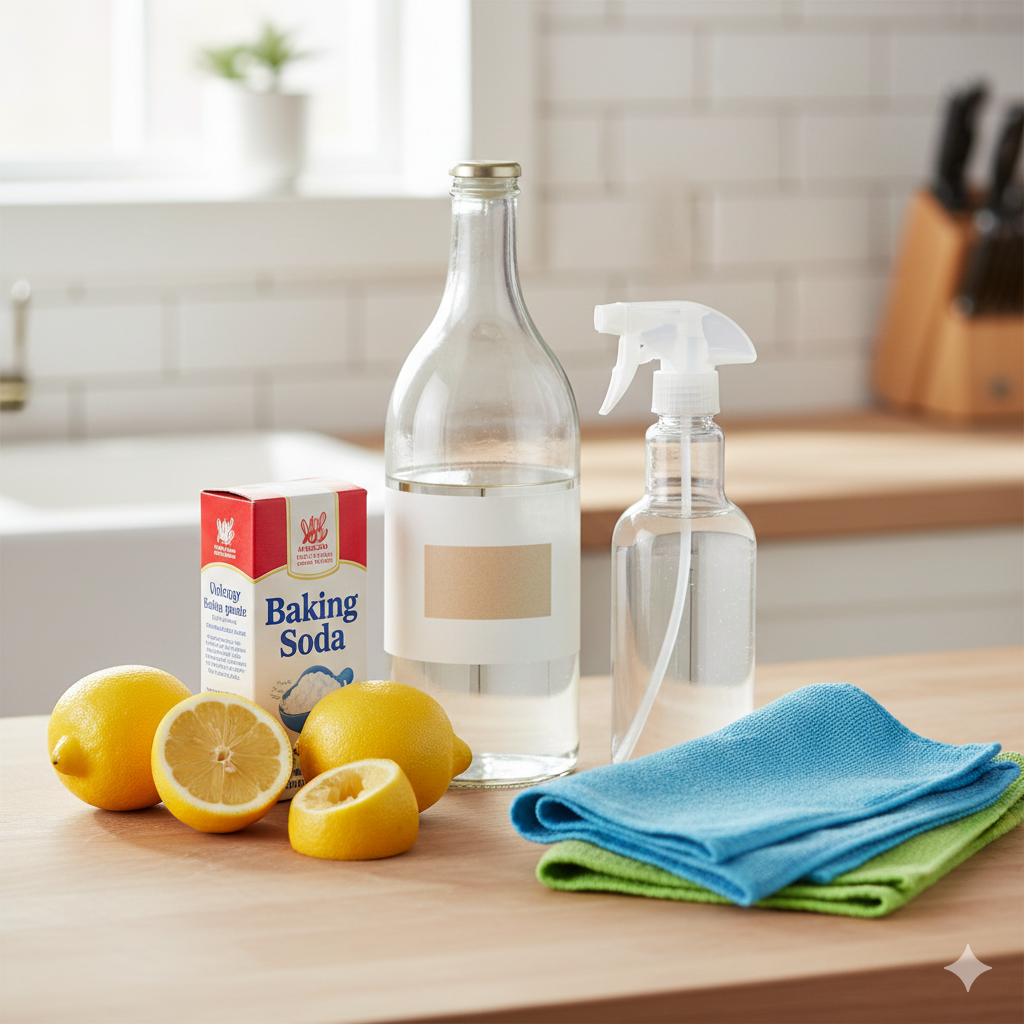
You can handle nearly every household cleaning task with just five ingredients:
- White vinegar - degreaser, descaler, glass cleaner, mild disinfectant
- Baking soda - abrasive cleaner, deodoriser, drain maintainer
- Castile soap - all-purpose cleaner, hand soap, dish soap
- Hydrogen peroxide (3%) - disinfectant, mould killer, stain remover
- Washing soda - heavy-duty degreaser, laundry booster
Certifications for Cleaning Products
When buying commercial cleaning products, these certifications indicate safer formulations:
- EPA Safer Choice - every ingredient reviewed for human and environmental safety
- EWG Verified - meets strict health-based criteria
- EU Ecolabel - European environmental certification covering cleaning products
For a full comparison of cleaning product certifications, see our Certifications Compared guide. Browse safer cleaning products in our cleaning products category.