 Hylea
Hylea
As consumers increasingly seek safer and more sustainable products, brands have responded - sometimes by genuinely improving their products, and sometimes by improving only their marketing. Greenwashing is the practice of making misleading claims about a product's environmental or health credentials. It's widespread, and getting better at spotting it is essential for making genuinely informed choices.
The Most Common Greenwashing Tactics
1. Vague, Undefined Claims
Terms like 'natural', 'eco-friendly', 'green', 'non-toxic', and 'clean' have no legal definitions for most product categories. Any company can use them without meeting any standard. When you see these words without a specific certification to back them up, they're essentially meaningless.
2. Irrelevant Claims
A product might boast 'CFC-free' - but CFCs have been banned for decades, so every product is CFC-free. Similarly, 'BPA-free' plastic might contain BPS or BPF, which are structurally similar and potentially just as concerning. The claim is technically true but practically meaningless.
3. Hidden Trade-offs
A product might highlight one positive attribute while ignoring significant negatives. A 'recycled plastic' water bottle is still single-use plastic. A cleaning product might be 'plant-based' but still contain VOCs from plant-derived solvents.
4. Fake or Misleading Certifications
Some brands create their own 'certifications' - official-looking logos that aren't backed by independent testing. Others use logos that resemble real certifications but are slightly different. Always check whether a certification is independently verified by a third party.
5. Beautiful Imagery, Weak Substance
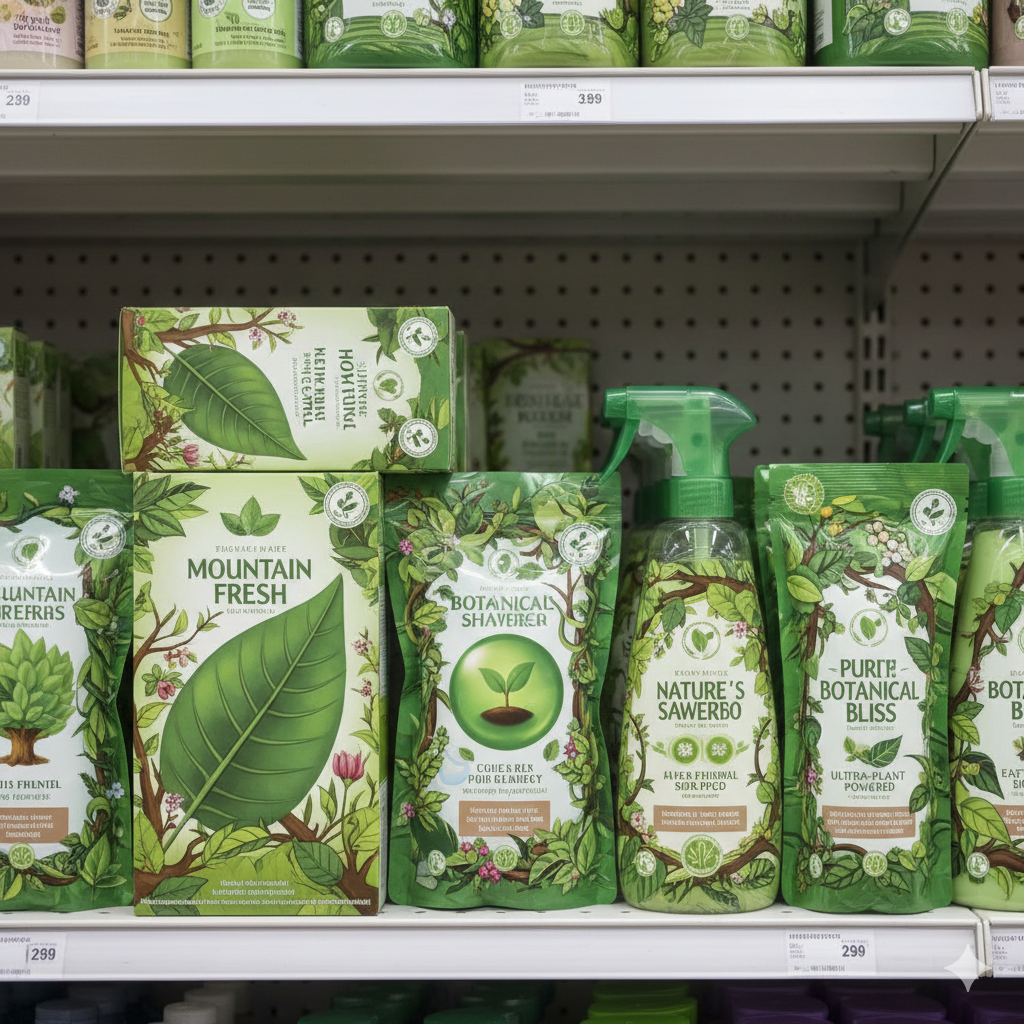
Green packaging, pictures of leaves and flowers, and earthy colour schemes create an impression of naturalness and safety. But packaging design tells you nothing about what's inside. Always read the actual ingredient list.
Red Flags to Watch For
- Claims without specifics ('better for you' - better than what?)
- No third-party certification backing up health or environmental claims
- 'Free from' claims that highlight absence of one chemical while ignoring others
- Ingredient lists that still include 'fragrance' or 'parfum' (can hide phthalates and other undisclosed chemicals)
- Claims that can't be verified ('dermatologist recommended' - which dermatologist?)
- Products that highlight one natural ingredient while the rest of the formula is synthetic
- Brands that refuse to disclose full ingredient lists
Certifications You Can Trust
The antidote to greenwashing is third-party certification. These organisations independently test and verify products against published standards:
- EWG Verified - strict health-based screening of all ingredients
- MADE SAFE - screens for known toxic chemicals, independently tested
- EPA Safer Choice - every ingredient reviewed by EPA scientists
- COSMOS - internationally recognised organic and natural cosmetics standard
- OEKO-TEX Standard 100 - tests textiles for harmful substances
- GOTS - organic textile certification covering the full production chain
For a detailed comparison of these and other certifications, see our Certifications Compared guide.
How to Be a Smarter Shopper
- Read ingredient lists, not marketing claims. The front of the package is advertising; the back is information
- Look for third-party certification logos from recognised, independent organisations
- Be sceptical of vague language. If a claim isn't specific and verifiable, it's probably marketing
- Check the full ingredient list - a product can be '95% natural' and still contain concerning chemicals in the other 5%
- Use resources like our chemicals database to look up unfamiliar ingredients
For more on decoding product labels and spotting misleading claims, read our How to Read Labels guide. Understanding how EU and US regulations differ also helps you understand why greenwashing is so prevalent.