 Hylea
Hylea
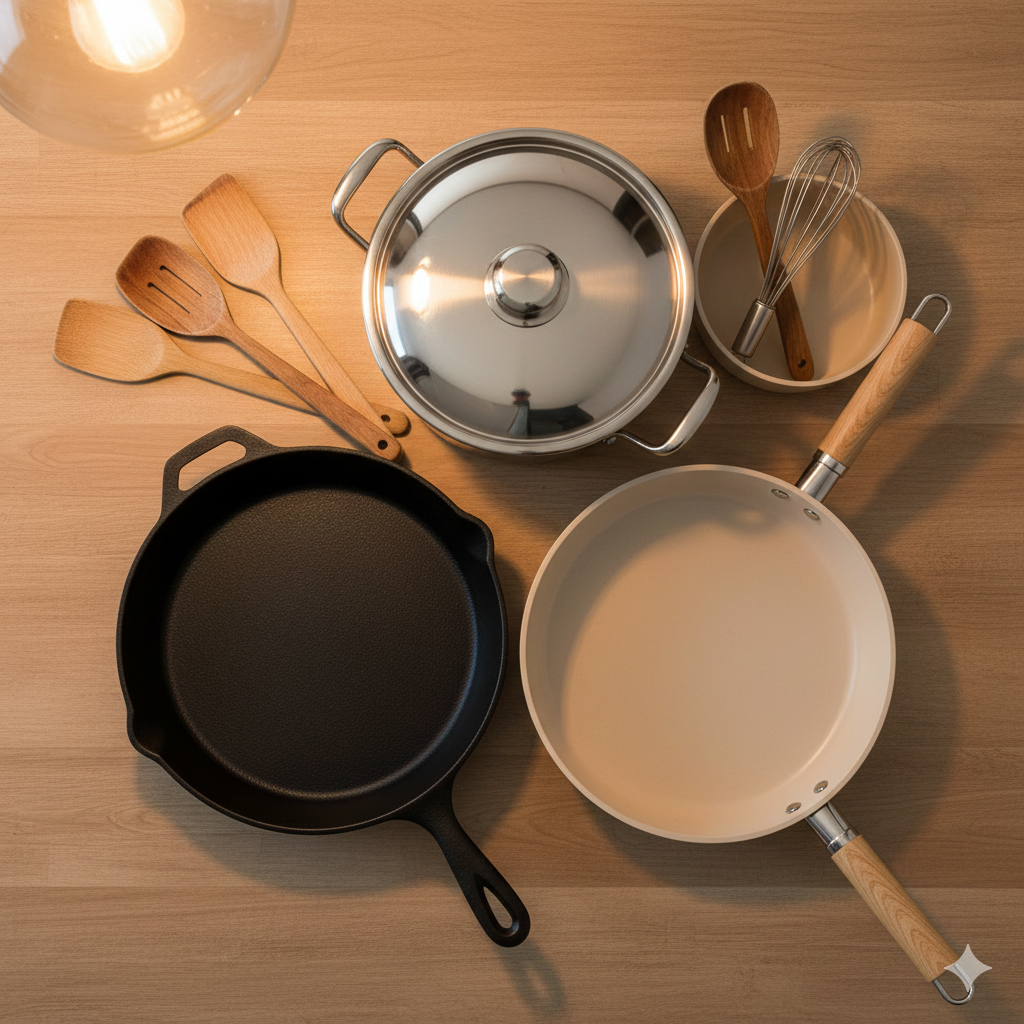
Cookware is in direct contact with your food at high temperatures - the perfect conditions for chemical migration. Non-stick coatings, in particular, have come under scrutiny for containing PFAS (per- and polyfluoroalkyl substances), a class of persistent chemicals linked to serious health concerns.
The Problem with Non-Stick Coatings
Traditional non-stick coatings (Teflon and similar PTFE-based coatings) are made using PFAS chemicals. While manufacturers phased out PFOA (the original concerning PFAS) in 2015, replacement chemicals like GenX are structurally similar and may carry comparable risks. At high temperatures (above 260C/500F), PTFE coatings can break down and release toxic fumes.
Newer 'ceramic' non-stick coatings are generally PFAS-free and a safer alternative, though they tend to lose their non-stick properties faster than PTFE.
Cookware Types Ranked by Safety
Safest Options
- Cast iron - extremely durable, naturally non-stick when seasoned, adds small amounts of dietary iron. Avoid for highly acidic foods (tomato sauce) with long cooking times
- Stainless steel - non-reactive, durable, oven-safe. Look for 18/10 grade (18% chromium, 10% nickel). Small amounts of nickel can leach, so those with nickel allergies should choose nickel-free options
- Carbon steel - similar to cast iron but lighter. Develops a natural non-stick surface with seasoning
- Glass and ceramic (solid, not coated) - completely non-reactive. Ideal for baking and oven use
Good Alternatives
- Ceramic-coated - PFAS-free non-stick surface. Good option if you want non-stick convenience. Replace when coating begins to chip or lose effectiveness
- Enamelled cast iron - combines cast iron durability with a non-reactive enamel surface. Suitable for acidic foods. More expensive but long-lasting
Avoid
- PTFE/Teflon-coated - contains PFAS, releases toxic fumes at high heat, coating deteriorates over time
- Aluminium (uncoated) - reactive with acidic foods, can leach aluminium. Anodised aluminium is better but still not ideal
- Copper (unlined) - reactive, can leach copper in excessive amounts. Lined copper (with stainless steel) is fine
Beyond Pots and Pans
Cookware isn't the only kitchen item that matters. Consider these common sources of chemical exposure:
- Baking sheets and muffin tins: Choose stainless steel or silicone over non-stick coated options
- Cooking utensils: Wooden, stainless steel, or silicone utensils are safer than plastic (which can melt and leach)
- Food storage: Glass containers with silicone lids avoid BPA and phthalate concerns from plastic
- Cling film: Avoid wrapping food in PVC cling film, especially when heating. Use beeswax wraps or silicone lids instead
Tips for Safer Cooking
- Never heat non-stick pans above medium-high heat
- Replace scratched or chipped non-stick cookware immediately
- Don't use metal utensils on non-stick surfaces
- Ventilate your kitchen well while cooking (use an extractor fan)
- Season cast iron and carbon steel properly for natural non-stick performance
Want to learn more about PFAS and where they're found beyond the kitchen? Read our in-depth article on PFAS forever chemicals. For a full overview of chemicals in food-related products, browse our food packaging category.